马上注册!
您需要 登录 才可以下载或查看,没有账号?注册
×
Traditional Chinese medicine practitioner Steven Wolfgang Sass vividly remembers one patient who saw him for a neck condition that was causing a lot of pain. "Today you are getting my magical needles," Sass told his patient. After about 15 minutes of the acupuncture treatment, complemented with moxibustion and a light massage, the patient "sat up and was able to turn and tilt his head all the way to the right without pain", Sass told China Daily. The Australian physician said the patient, a neurologist, asked him, "How in the world did that work?" "We both had a great laugh. I saw him one more time a week later. … A herbal prescription was not needed in this case," said Sass, who runs a TCM clinic in Melbourne. 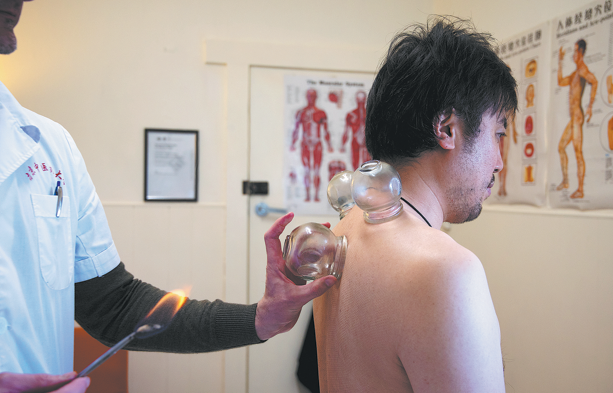 TCM practitioner Steven Wolfgang Sass gives glass-cupping therapy to a patient in his clinic in Melbourne on May 31. HE XINYI/FOR CHINA DAILY TCM practitioner Steven Wolfgang Sass gives glass-cupping therapy to a patient in his clinic in Melbourne on May 31. HE XINYI/FOR CHINA DAILYSince the opening of the clinic nearly two years ago, the number of patients has increased, with many of them "delighted and relieved that Chinese medicine can work alongside any other therapy and complement Western medical interventions as needed", Sass said. Sass' recollection of a high point in his more than two decades of TCM experience was a clear reflection of the growing influence of the medical practice in the Southern Hemisphere. As a registered acupuncturist and remedial massage therapist, as well as a registered Chinese herbal products dispenser and Chinese herbal medicine practitioner, he has a background that shows TCM is now widely accepted as a treatment in Australia. TCM, an ancient system of health and wellness developed from thousands of years of knowledge and experience focusing on the prevention of illness, is a nationally registered profession in Australia, according to Healthdirect Australia, the country's public health information service provider. The use of TCM in Australia has increased in recent years. Acupuncture, which has been practiced in Australia since the 1880s, has already become the country's most popular form of complementary medicine. According to the Chinese Medicine Board of Australia, which regulates the sector, in the 2023-24 period, there were 4,853 Chinese medicine practitioners, up 0.6 percent year-on-year, and comprising 0.5 percent of all registered health practitioners. The board also provides guidelines for the safe practice of Chinese herbal medicine, including the requirement that practitioners write in English on prescriptions and labels. Under the guidelines, medicines used in Chinese herbal medicine cover raw herbs, ingredients of natural origin such as minerals and animal products, as well as decoctions of single or multiple ingredients. 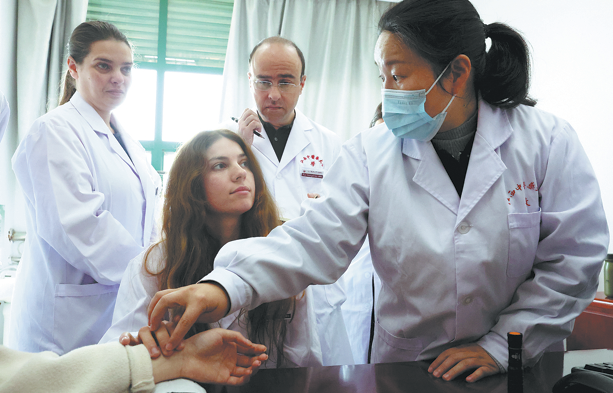 Portuguese students learn pulse diagnosis at a hospital in Nanchang, Jiangxi province, on April 2. LIU ZHANKUN/CHINA NEWS SERVICE Portuguese students learn pulse diagnosis at a hospital in Nanchang, Jiangxi province, on April 2. LIU ZHANKUN/CHINA NEWS SERVICE
|  关注公众号
关注公众号 QQ会员群
QQ会员群 京公网安备 11010102001080号


 发表于 2025-11-26 10:51:19
